What Amazon Won’t Let Me Tell You
By Christopher Marcus
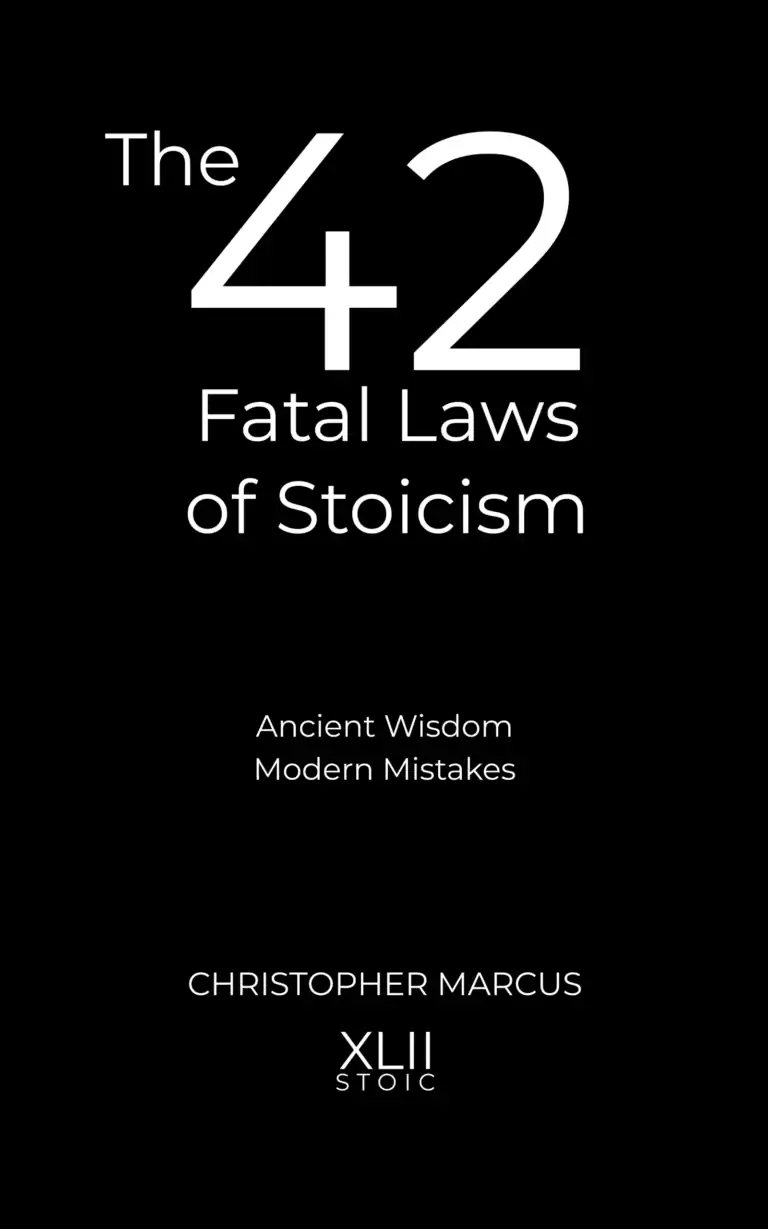
When I published The 42 Fatal Laws of Stoicism, Amazon let me to fill out several sections on the book’s product page. An author biography. A personal message from the author. Text for the inside flap. Text for the back cover.
I wrote each one the way I write everything: honest, direct, and from the gut.
Amazon rejected all of it.
Their automated content filter flagged my submissions over and over with the same generic message: “There is language within your submission that is in violation of our Content Guidelines. Please remove this content to create your submission.”
No specifics. No explanation. No human being to appeal to. Just a robot telling a veteran, a widower, and a spinal injury survivor that his life story contains “language in violation.”
So I rewrote everything in corporate-safe language until the robot let me through. What you see on Amazon is the filtered version. Softened. Sanitized. Stripped of the fire that made me write this book in the first place.
This article is the unfiltered version.
Below, you’ll find what Amazon shows you and what I actually wrote. Side by side. You decide which version sounds like the man who should be writing a book about surviving the worst life can throw at you.
FROM THE AUTHOR
What Amazon shows you:
Christopher Marcus is not a philosophy professor or a classical scholar. He is a man who found a way to remain standing through some of life’s most significant challenges.
After facing profound personal loss and a life-altering accident that resulted in severe spinal injuries, Christopher was told his path to recovery would be limited. He spent years navigating that recovery, eventually regaining his mobility and strength through sheer persistence.
He didn’t find Stoicism in a classroom; he found it while rebuilding his life from the ground up. Over the course of twenty years, he developed this handbook not for publication, but for his own personal resilience. These were lessons tested against his hardest days, principles he returned to every time the path forward seemed uncertain.
What I actually wrote:
I’m not a philosophy professor. I don’t have a PhD in classics. I’m not a published scholar.
I’m a man who lost everything twice and had to find a way to keep standing.
I buried my best friend, my wife after ten years, when she was 30. Breast cancer. One year later, a catastrophic motorcycle accident ruptured five vertebrae at T4. After 25 years of riding, my helmet saved my life by being destroyed against the pavement. I woke up in the ICU with a collapsed lung, broken bones, and a prognosis: paraplegic.
I spent two months in spinal rehabilitation. Regained control of my left foot. Spent a year of intensive therapy learning to do what doctors said I wouldn’t. Walk. One hundred yards with a cane. Then more. Then without it.
I didn’t find Stoicism in a bookstore. I found it in the wreckage.
It took more than twenty years to write this book, because I wasn’t writing a book. I was building a handbook for myself. Notes scrawled in margins at 3 AM. Lessons tested against the worst days of my life. Principles I returned to every time the ground disappeared beneath me.
Then I noticed something. A pattern that kept showing up across two thousand years of history.
Certain people faced impossible circumstances and not only endured but transformed. Marcus Aurelius ruled an empire during a plague that killed millions. Epictetus built a philosophy school as a formerly enslaved man with a crippled leg. Seneca faced exile, political ruin, and a death sentence with his principles intact.
Others, just as talented, just as powerful, just as exposed to the same philosophy, broke completely. Nero had every advantage Rome could offer and burned it to the ground, starting with himself. Commodus inherited the most stable empire in human history and dismantled it for applause. Crassus commanded legions and limitless wealth and marched himself into annihilation because he couldn’t master his own greed.
Same philosophy. Same access. Opposite outcomes.
The difference wasn’t luck. It wasn’t fate. It was whether they mastered a specific set of principles or violated them.
Those principles became the 42 Fatal Laws.
Every law in this book has two edges. Applied correctly, it builds a life that bends but never breaks. Misapplied or ignored, it guarantees the same outcome it has guaranteed for two thousand years.
I wrote this for the person standing where I stood. In the wreckage. In the ICU. In the silence after the phone call that changes everything. In the ordinary Tuesday where nothing is wrong but nothing feels right either.
The Stoics didn’t write for classrooms. They wrote for battlefields, courtrooms, sickbeds, and exile camps. They wrote for people whose lives were falling apart and who needed something that actually worked.
That is what this book is.
I tested every one of these laws against my own life before I put them on paper. The ones that held up are here. The ones that didn’t, aren’t.
You don’t need to read this book in order. Open it to whatever law speaks to where you are right now. Read the history. Do the exercise. Come back tomorrow and do another one.
This is not a book you read once and put on a shelf. This is a field manual you carry.
This is my handbook. Now it’s yours.
ABOUT THE AUTHOR
What Amazon shows you:
Christopher Marcus is a student of Stoic philosophy, a U.S. Army veteran, and a practitioner of ancient wisdom in the modern world.
For over twenty years, Christopher has been distilling the primary sources of Marcus Aurelius, Seneca, and Epictetus. His work focuses on the intersection of classical thought and daily practice, moving philosophy out of the classroom and into the field.
He is a U.S. Army veteran (E5, Civil Affairs, Honorable 1995), a father of five, a husband, and an entrepreneur. He lives in Texas, where he continues to study the principles of resilience and character.
His writing is the result of two decades of research and the practical application of Stoic laws to the complexities of leadership and personal growth. He writes not as an academic, but as a fellow traveler on the path to wisdom.
Still walking. Still learning. Still here.
What I actually wrote:
Christopher Marcus didn’t come to Stoicism through academia. He came through fire.
In 1997, he lost his wife and best friend to breast cancer. She was 30. One year later, a catastrophic motorcycle accident ruptured five vertebrae at T4. After 25 years of riding, his helmet saved his life by being destroyed against the pavement. He woke up in the ICU with a collapsed lung, broken bones, and a prognosis: paraplegic.
He spent two months in spinal rehabilitation. Regained control of his left foot. Spent a year of intensive therapy learning to do what doctors said he wouldn’t. Walk. One hundred yards with a cane. Then more. Then without the cane.
The Stoics became his guides through both losses, the wife he buried and the body and mind he rebuilt. Marcus Aurelius, Seneca, Epictetus: these weren’t philosophers to him. They were survival manuals.
In 2011, love struck twice. He married his best friend, his partner, his second miracle. Together they’re raising their children, including a son with the gift of the chromosome of innocence, Down syndrome, who teaches him more about presence and joy than any philosopher ever could.
A U.S. Army veteran (E5, Civil Affairs, Honorable 1995), father (5x), husband, son, brother, writer, entrepreneur, a pilot in training, and a man still learning. The 42 Fatal Laws of Stoicism is the book he wished someone had handed him in that ICU bed, a field manual for surviving what should destroy you.
He writes not as an expert, but as a fellow traveler. Still walking. Still learning. Still here.
FROM THE INSIDE FLAP
What Amazon shows you:
Timeless wisdom for the modern age.
Every principle in this book offers a clear path. When studied with care, these laws provide a foundation for character and resilience. When ignored, history shows the challenges that follow, illustrated by the lives of the past’s most influential figures.
Christopher Marcus spent over twenty years distilling these 42 principles from the primary sources of Stoic philosophy. This is a collection of insights forged through decades of study and the practical application of these truths during seasons of profound change and the process of personal growth.
What I actually wrote:
Ancient wisdom that saves, or destroys.
Every law in this book has two edges. Applied correctly, it builds an unshakeable life. Misapplied, it guarantees your destruction, just as it destroyed some of history’s most powerful people.
Christopher Marcus spent more than twenty years assembling these 42 laws from the primary sources of Stoic philosophy, not as academic exercise, but as a survival manual forged through personal loss, catastrophic injury, and the daily practice of rebuilding a life.
Each law includes the original Stoic teaching, the fatal mistake that violates it, historical examples of both triumph and catastrophe, and a practical exercise for applying the principle today.
Whether you’re facing grief, failure, illness, or simply the relentless pressure of modern life, the Stoics faced it first. Their answers are in these pages.
The question is: will you master them, or will they master you?
Why This Matters
I’m not writing this article to complain. Amazon is a platform. Platforms have rules. I followed them.
But I am writing this because the filtered version of my story is not my story.
“Profound personal loss” is not the same as burying your wife at 30.
“A life-altering accident that resulted in severe spinal injuries” is not the same as waking up in the ICU as a paraplegic and spending a year learning to walk again.
“Seasons of profound change” is not the same as losing everything and rebuilding from nothing.
The Stoics did not speak in euphemisms. Marcus Aurelius wrote about death plainly. Seneca described his own execution with clarity. Epictetus taught with the bluntness of a man who had been enslaved and broken.
If a book about Stoicism can’t tell the truth about suffering on the platform that sells it, then the book needs a place where it can.
This is that place.
The Book
The 42 Fatal Laws of Stoicism: Ancient Wisdom. Modern Mistakes. is available now on Amazon in paperback, ebook, and hardcover.
If you want the filtered version, Amazon has it.
If you want the real one, you’re already here.
Join the reader list at 42laws.com
Christopher Marcus is a U.S. Army veteran (E5, Civil Affairs, Honorable 1995), father (5x), husband, writer, entrepreneur, and pilot in training. He lives in Texas. He writes not as an expert, but as a fellow traveler. Still walking. Still learning. Still here.